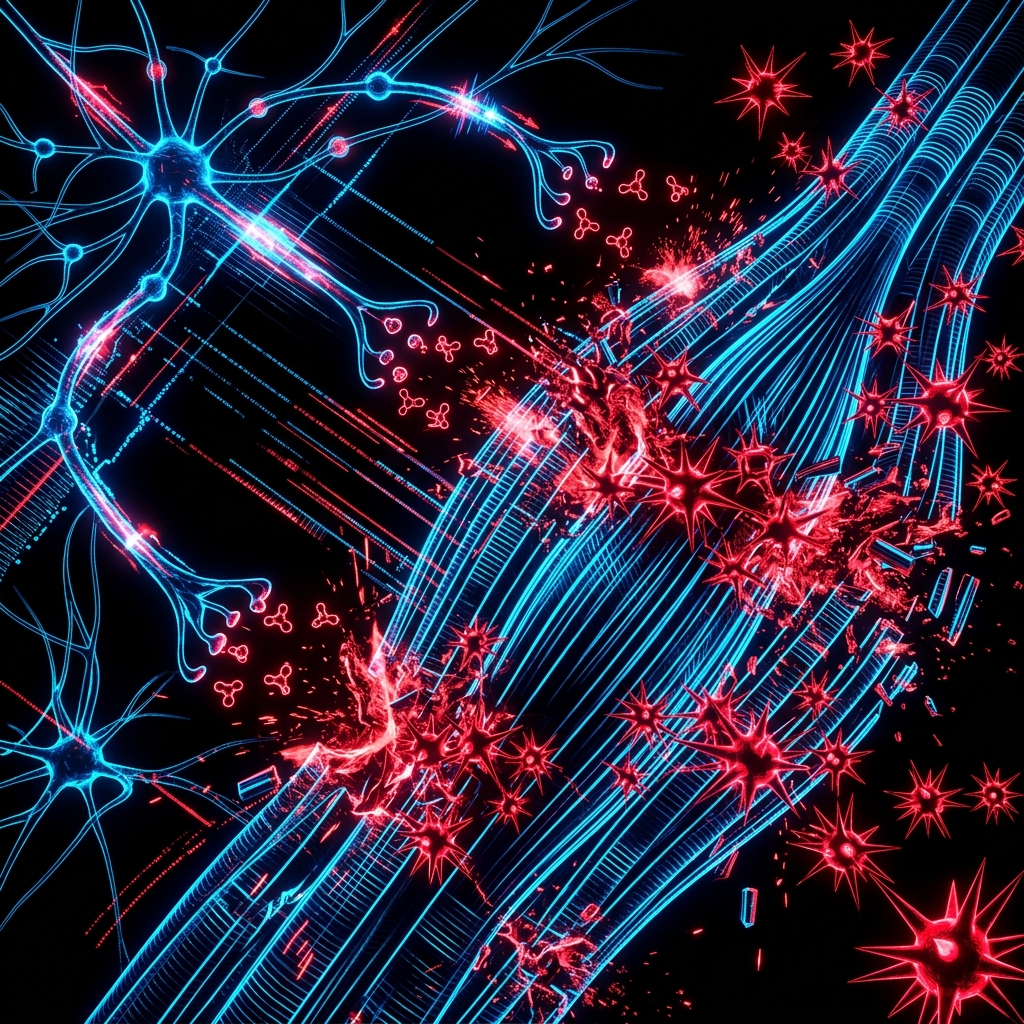
The Cortisol Catastrophe: Why Chronic Stress is Catabolic to Muscle Tissue
The Cortisol Catastrophe: Why Chronic Stress is Catabolic to Muscle Tissue
Stop guessing, look at the data. You are optimising your macros, tracking your volume, and swallowing handfuls of supplements, yet you are still losing muscle mass and gaining abdominal fat. The fitness industry wants you to buy another pre-workout or adjust your split. The clinical reality is far more brutal: your Autonomic Nervous System (ANS) is in a state of sympathetic overdrive, and the resulting neurochemical cascade is literally digesting your muscle tissue.
This is the cortisol catastrophe.
The Neurochemistry of Systemic Catabolism
When you are chronically stressed—whether from lack of sleep, systemic inflammation, or psychological load—your Hypothalamic-Pituitary-Adrenal (HPA) axis becomes dysregulated. The hypothalamus secretes CRH (Corticotropin-Releasing Hormone), signaling the pituitary to release ACTH (Adrenocorticotropic Hormone), which commands the adrenal glands to flood your system with cortisol.
Acute cortisol is adaptive; it mobilises glucose for a fight-or-flight response. Chronic cortisol is a biochemical nightmare. Persistent activation of the HPA axis flattens the natural diurnal cortisol curve, maintaining elevated glucocorticoid levels that shift the body into a chronic state of catabolism.
Muscle Wasting: The Ubiquitin-Proteasome Pathway
Cortisol does not just passively prevent muscle growth; it actively dismantles it.
When chronically elevated glucocorticoids bind to the Glucocorticoid Receptor (GR) in skeletal muscle, they orchestrate a two-pronged attack:
- Suppression of Anabolism: Cortisol directly inhibits the PI3K/Akt pathway, the primary signalling cascade responsible for muscle protein synthesis and IGF-I production. You cannot out-train a suppressed Akt pathway.
- Upregulation of Proteolysis: Cortisol stimulates the transcription of E3 ubiquitin ligases—specifically MAFbx (atrogin-1) and MuRF1. These enzymes literally tag your muscle proteins with ubiquitin, signaling the proteasome to shred them into amino acids for hepatic gluconeogenesis.
The Visceral Fat Paradox
As cortisol strips amino acids from your deltoids and quads, it simultaneously orchestrates fat storage in the worst possible location.
Visceral adipose tissue (deep belly fat) has a significantly higher density of glucocorticoid receptors compared to subcutaneous fat. When chronic cortisol elevations are combined with insulin, it promotes the storage of triglycerides directly in these visceral depots. This creates the classic "sarcopenic obesity" or "skinny fat" phenotype: atrophied limbs coupled with central adiposity and metabolic syndrome.
Stop Guessing
The data is clear. If your sympathetic nervous system is locked in overdrive, your endocrine system will prioritize survival (energy mobilization) over adaptation (muscle hypertrophy).
You cannot out-work a hostile hormonal environment. Track your Heart Rate Variability (HRV) as a proxy for sympathetic tone. Prioritise recovery protocols that shift you into a parasympathetic state. Control the HPA axis, or it will control your body composition.