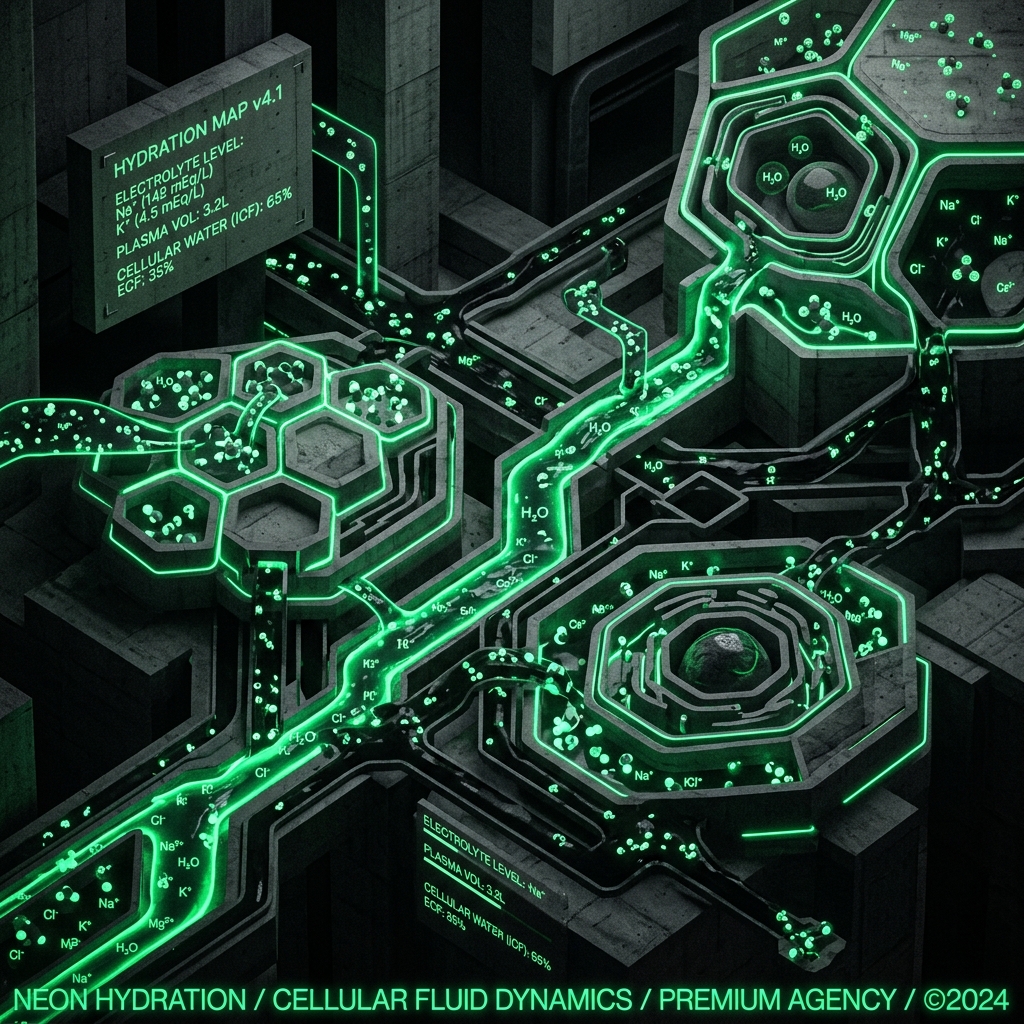
The Sodium-Aldosterone Paradox: Why Low-Salt Diets Destroy Intracellular Hydration
For decades, conventional medical dogma and mainstream bodybuilding folklore have warned against sodium. Lifters cut salt to "dry out" for a photoshoot, or reduce sodium intake under the misguided belief that salt causes high blood pressure and vascular stiffness.
In hard-training, metabolically active humans, the opposite is true. Sodium restriction is one of the most catabolic mistakes an athlete can make.
Cutting sodium does not eliminate subcutaneous water retention. Paradoxically, it activates a survival reflex that traps interstitial fluid, dumps intracellular potassium, and shrinks muscle volume.
The Renin-Angiotensin-Aldosterone System (RAAS)
The human body regulates fluid homeostasis with microscopic precision. When dietary sodium drops, blood volume decreases, causing a reduction in renal perfusion pressure.
The juxtaglomerular cells in the kidneys immediately detect this drop and secrete Renin. Renin converts angiotensinogen into Angiotensin I, which is subsequently converted by ACE into Angiotensin II—a potent vasoconstrictor.
Angiotensin II stimulates the adrenal cortex to unleash a massive surge of Aldosterone.
Aldosterone's primary biological directive is to scavenge and retain every single molecule of sodium at all costs. It acts on the distal convoluted tubules and collecting ducts of the nephron to reabsorb sodium. But this reabsorption is an exchange mechanism: to hold onto sodium, the kidneys aggressively excrete potassium and hydrogen ions into the urine.
Intracellular Deflation and Cramping
Potassium is the primary intracellular cation responsible for drawing water inside the muscle cell. Sodium is the primary extracellular cation responsible for maintaining vascular volume.
When aldosterone spikes due to sodium deprivation:
- You waste intracellular potassium, deflating muscle cell volume.
- The body holds onto subcutaneous, extracellular water, creating a soft, watery appearance.
- Blood volume plummets, impairing cardiac output, reducing nutrient delivery to working muscles, and killing intra-workout pumps.
Furthermore, the Sodium-Potassium ATPase pump—which powers nerve conduction, muscle contraction, and amino acid uptake via sodium-dependent transporters—begins to malfunction. You experience debilitating muscle cramps and rapid loss of strength.
The Optimization Protocol
- Baseline Sodium Floor: Hard-training athletes who sweat heavily require 4,000mg to 6,000mg of elemental sodium per day (equivalent to 10–15g of unrefined sea salt or kosher salt), not the 2,000mg recommended for sedentary individuals.
- Peri-Workout Timing: Ingest 1,000mg of sodium (1/2 teaspoon of salt) in 500ml water 45 minutes before high-intensity training. This maintains plasma volume, elevates stroke volume, and optimizes motor unit contractility.
- Potassium Pairing: Balance high sodium with rich dietary potassium sources (potatoes, avocados, spinach) to maintain an optimal 2:1 sodium-to-potassium cellular balance without triggering aldosterone spikes.
Salt is not a toxic preservative. It is the electro-chemical conductor of muscular output.