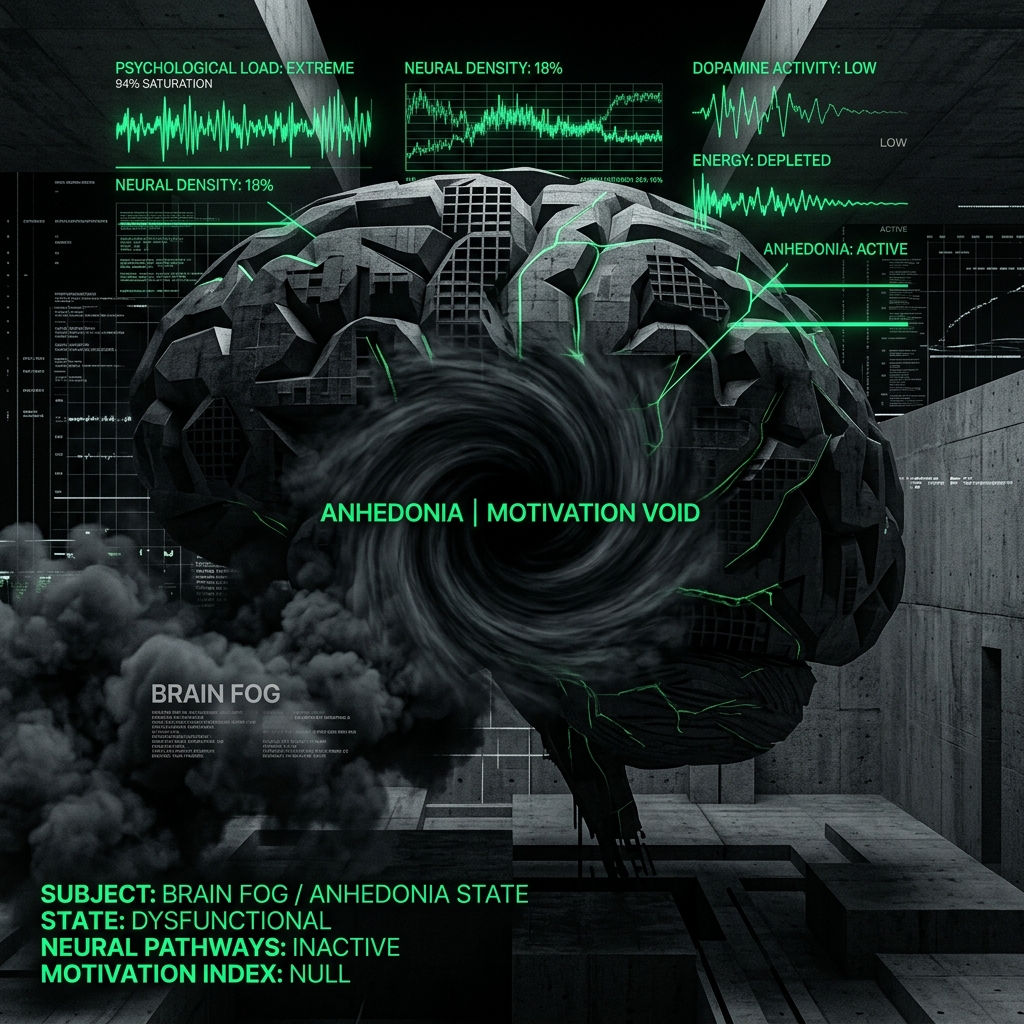
The Motivation Void: Recognising High-Functioning Depression
High-functioning depression is the most insidious psychological trap for a driven athlete or executive. Unlike clinical major depression, which often leaves an individual entirely bedridden, high-functioning depression is heavily masked. You still show up to work. You still hit your macros. You still train. But the internal engine powering those actions is completely running on empty.
You are no longer driven by intrinsic motivation or reward; you are entirely propelled by anxiety, cortisol, and the raw fear of failure. This is not sustainable.
The Illusion of Productivity
High achievers mistakenly believe that because they are executing tasks, their mental health must be intact. This is a fatal diagnostic error. Forced productivity is often a maladaptive coping mechanism used to drown out the internal void. You keep moving because stopping forces you to confront the absolute apathy you feel towards your own life.
When you push through severe anhedonia (the inability to feel pleasure) using sheer willpower, you lock your central nervous system into a chronic state of sympathetic overdrive. Your brain perceives this forced effort as an ongoing threat, triggering the HPA-axis to continuously pump cortisol and adrenaline into your bloodstream. You are financing your daily output with a biological loan that carries exorbitant interest rates.
The Gut-Brain Axis: Where Motivation Actually Dies
The modern approach to treating depression focuses almost entirely on the brain, completely ignoring the largest neurological organ in the body: the enteric nervous system (the gut).
Over 90% of your body's serotonin is manufactured in the gastrointestinal tract. When you live in chronic stress—or fuel your forced productivity with poor food choices and sleep deprivation—you actively destroy your gut microbiome. This dysbiosis triggers systemic inflammation. Inflammatory cytokines cross the blood-brain barrier and actively disrupt the synthesis of dopamine and serotonin.
Your lack of motivation is not a character flaw; it is a downstream symptom of severe enteric neuroinflammation.
Clinical Markers of the Void
Stop trying to measure your mental health purely by your output. Instead, look at the physiological and behavioural signs of the motivation void:
- Chronic Apathy: You no longer care about your hobbies, your relationships, or your PRs. You are just going through the motions.
- Exhaustion That Sleep Does Not Fix: You can sleep for nine hours and wake up feeling like you were hit by a truck. This is because your REM sleep architecture is fragmented by sympathetic hyperarousal.
- Low-Level Irritability: You have zero patience. Your baseline emotional state is a simmer of frustration because your brain is exhausted from maintaining the mask.
- Sensory Overwhelm: Loud noises, bright lights, or complex tasks suddenly feel unbearable. Your nervous system no longer has the bandwidth to process environmental data.
Breaking the Cycle
You cannot out-work the motivation void. If you try to aggressively push through it, you will eventually hit a catastrophic central nervous system burnout.
To fix this, you must temporarily stop optimising for output and start optimising for nervous system regulation. You have to repair the gut microbiome to restore serotonin production, aggressively defend your sleep architecture, and temporarily step back from the stressors that are locking you in fight-or-flight. You must rebuild the biological hardware before you can expect the psychological software to run properly.